
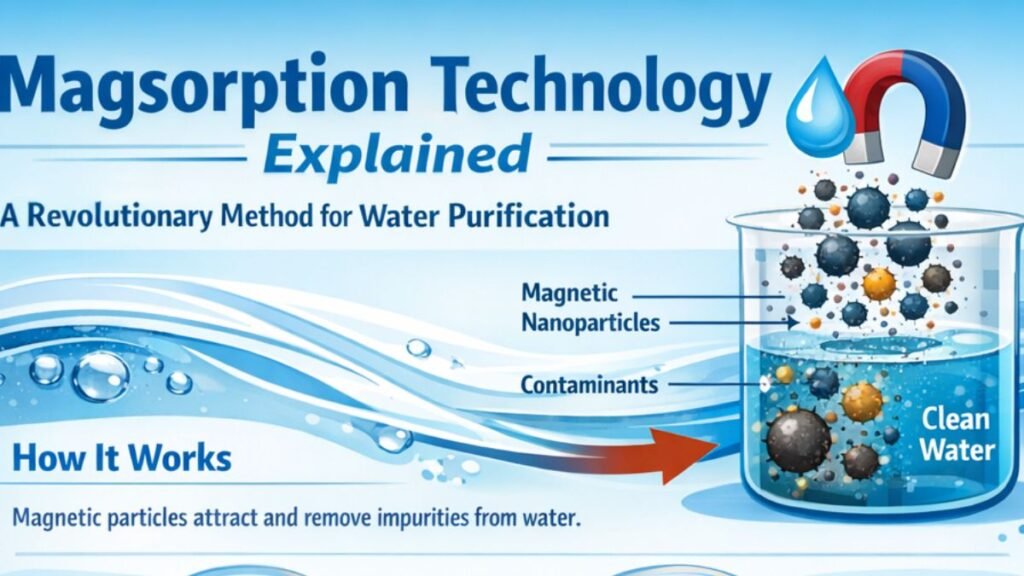
Magsorption technology is an innovative approach in water and wastewater treatment that uses magnetic adsorption to remove contaminants. Unlike traditional filtration, it leverages specially engineered magnetic materials that attract and capture impurities, including heavy metals and organic pollutants. This technology offers a faster and more effective method for purifying water, reducing the need for chemical additives. By combining magnetism with adsorption principles, Magsorption ensures higher efficiency and cleaner water output. Its versatility makes it suitable for industrial, municipal, and even household applications.
How Magsorption Works
At the core of Magsorption technology are magnetic nanoparticles coated with adsorption-friendly compounds. When water passes through a Magsorption system, these particles bind to pollutants and heavy metals. The magnetic property allows for easy separation of the particles after treatment, leaving water purified. The process is not only efficient but also environmentally friendly, as it minimizes sludge production. Additionally, Magsorption can be tailored to target specific contaminants, making it highly adaptable for different water treatment needs.
Advantages of Magsorption Technology
Magsorption technology offers several advantages over conventional water treatment methods. It provides faster contaminant removal and can operate at room temperature, reducing energy costs. The system is compact and can be integrated into existing water treatment setups without extensive modifications. Its high selectivity ensures that even trace amounts of pollutants are captured effectively. Furthermore, Magsorption reduces chemical usage, making it a sustainable choice for industries aiming to lower their environmental footprint.
Applications in Industry
Industries dealing with heavy metal effluents, such as mining, metal processing, and chemical manufacturing, benefit greatly from Magsorption technology. It helps them meet strict environmental regulations while ensuring water safety. In addition, power plants and textile factories can use this technology to treat wastewater efficiently before discharge. Even food and beverage industries are exploring magnetic adsorption for maintaining high water quality standards. The flexibility of Magsorption makes it a valuable tool for a wide range of industrial applications.
Environmental Impact
One of the most significant benefits of Magsorption technology is its positive environmental impact. By reducing the reliance on chemical coagulants and minimizing sludge production, it lowers the risk of secondary pollution. The captured contaminants can be safely removed and processed, preventing them from entering natural water bodies. Its energy-efficient operation also contributes to lower carbon emissions. Overall, Magsorption represents a step forward toward sustainable and eco-friendly water treatment solutions.
Future Prospects
As research in nanotechnology and magnetic materials progresses, Magsorption technology is poised to become even more effective. Future developments may include enhanced magnetic adsorbents capable of targeting emerging pollutants such as microplastics and pharmaceutical residues. Integration with smart monitoring systems could allow real-time water quality control, improving efficiency and reliability. The ongoing innovation promises to expand its applications across residential, commercial, and industrial water treatment, making clean water more accessible worldwide.
Conclusion
Magsorption technology is transforming the water treatment landscape by providing a fast, efficient, and environmentally friendly solution. Its ability to remove a wide range of pollutants, coupled with its adaptability and sustainability, positions it as a leading choice for modern water purification. As industries and communities seek cleaner water solutions, Magsorption stands out as a promising and practical innovation for a healthier planet.
FAQs
What is Magsorption technology?
Magsorption is a water treatment method that uses magnetic materials to adsorb and remove contaminants efficiently.
How does Magsorption remove pollutants?
Magnetic nanoparticles bind to impurities in water, which can then be separated easily using magnetic fields.
Is Magsorption environmentally friendly?
Yes, it reduces chemical use, minimizes sludge, and lowers energy consumption compared to traditional methods.
What industries use Magsorption?
Mining, chemical manufacturing, power plants, textile factories, and food processing industries benefit from this technology.
Can Magsorption treat household water?
Yes, compact Magsorption systems can be adapted for home use to ensure cleaner and safer drinking water.